TL;DR From 1 July 2027, only new builds and property held before 7:30pm on 12 May 2026 can be negatively geared against salary, and the 50% capital gains tax discount survives only as an option on new builds and affordable housing. Our illustrative modelling across Ipswich, Melton and Cessnock puts a new build about $11,500 to $12,500 a year cheaper to hold than an established house at the same price and rent.
The short answer: new builds keep the tax benefits
New builds keep the tax benefits. Established dwellings bought after Budget night largely lose them.
The Treasury Laws Amendment (Tax Reform No. 1) Act 2026 is now law. From 1 July 2027, a rental loss on an established dwelling acquired after 7:30pm AEST on 12 May 2026 can no longer reduce tax on your wages, and the 50% capital gains tax (CGT) discount for individuals, trusts and partnerships is replaced by cost base indexation and a 30% minimum tax on gains. New residential dwellings keep negative gearing and can still choose the 50% discount.
Property held at 7:30pm on 12 May 2026, including unsettled contracts, can be negatively geared until sold. Its gains to 1 July 2027 keep the 50% discount, while later gains move to indexation.Negative gearing now follows the new build
A quarantined loss carries forward against residential income or gains, but deferred relief is worth less.
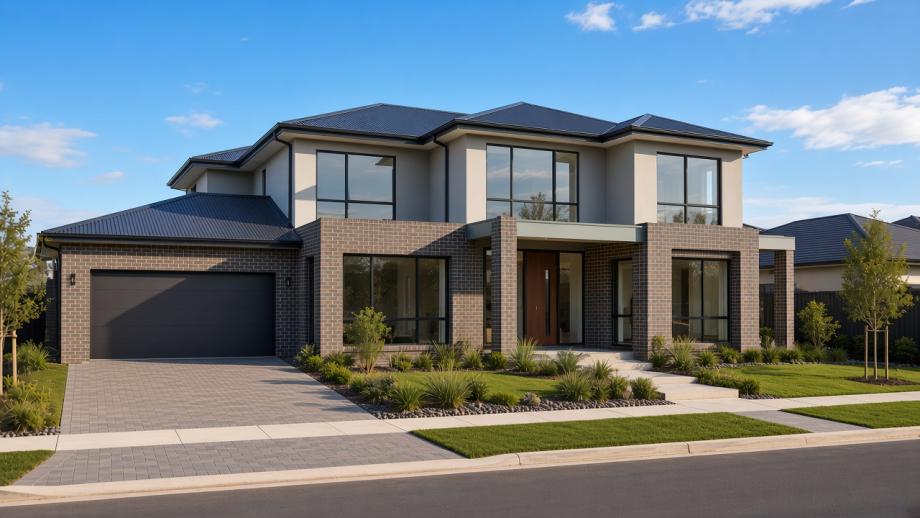
What counts as new is not yet law. After August 2026 consultation, the definition went into the Treasury Laws Amendment (Tax Reform No. 3) Bill 2026, introduced on 14 October, with a Senate committee due to report on 13 November. As drafted, a qualifying dwelling must be separately saleable, generally be certified for occupancy on or after Budget night, and either be built on land bought vacant, add to the dwellings on a site, convert a non-residential building, or be bought within 24 months of its occupancy certificate from the party it was new for.
A one-for-one rebuild fails, but separately titled duplexes or a dual occupancy that adds dwellings qualifies. A house and land package on a vacant lot is the simplest fit.Same price, same rent, different tax
Here are three corridors where our investors are active.| Corridor | AIP new build median | AIP advertised rent | Gross yield | Listings |
|---|
| Ipswich, QLD | $922,500 | $680/wk | 3.83% | 180 |
| Melton, VIC | $727,225 | $540/wk | 3.86% | 38 |
| Cessnock, NSW | $970,790 | $775/wk | 4.15% | 63 |
AIP listing data October 2026, single-dwelling house and land, advertised rents.
Illustrative modelling, not a forecast. Each corridor is modelled at our new build median price and rent, against an established house at the same price and rent. An investor on $120,000 (32% marginal rate including Medicare levy) buys after Budget night and holds through 2027-28, with no other residential income. Assumptions: 80% LVR, 6.2% interest only, 7.7% management, $5,000 rates and insurance, $2,000 maintenance established against $400 new, and year-one depreciation of $15,500 new against $5,000 established.
| Corridor | Established, weekly cost after tax | New build, weekly cost after tax | New build advantage |
|---|
| Ipswich, QLD | $387/wk | $147/wk | $240/wk ($12,490/yr) |
| Melton, VIC | $330/wk | $108/wk | $222/wk ($11,540/yr) |
| Cessnock, NSW | $345/wk | $118/wk | $227/wk ($11,790/yr) |
Before tax, the gap is only $1,600 a year. In Ipswich, just under half the gap comes from using the loss against salary, about 40% from depreciation and the rest from maintenance.
Since 7:30pm on 9 May 2017, most individual investors buying second-hand residential property cannot depreciate the plant and equipment already in it. That is why the model assumes year-one depreciation of around $15,500 on a typical new house, against $5,000 of capital works on an established one.
The honest trade-offs
Price and land.
On our October listings, the middle 80% of Melton packages sit between about $644,000 and $770,000, below Ipswich (about $845,000 to $1.05 million) and Cessnock (about $918,000 to $1.04 million). Median lots are 400 square metres in Ipswich, 350 in Melton and 756 in Cessnock. Land appreciates and buildings depreciate, so weigh lot size and growth as well as tax, and check recent sales nearby before you sign.
Rental demand.
A new build can pull tenants who want modern layouts and lower maintenance, but the rent still has to clear in that suburb. Use our advanced search filters to compare vacancy, yield and similar listings before you lean on an appraisal.Outlook
About eight months remain before 1 July 2027, and established purchases made now can be negatively geared only until 30 June 2027. Expect demand, and package prices, to rise where new supply is tight, so watch corridors where new stock is priced close to recent local sales. Existing owners' assets are treated as reacquired at their 1 July 2027 value, set by valuation or an ATO formula.
Use the advanced search filters on our website to compare stock by price, yield and property type.Conclusion
From 1 July 2027, new and established dwellings are taxed very differently. On identical price and rent, a new build is roughly $11,500 to $12,500 a year cheaper to hold. The discipline is not paying that advantage back in the purchase price.Key Takeaways
- Negative gearing against salary survives on new builds. Established dwellings acquired after Budget night have losses quarantined from 1 July 2027.
- The 50% CGT discount survives only as an option on new builds and affordable housing. Other gains move to indexation and a 30% minimum tax.
- The gap is material. About $11,500 to $12,500 a year in our modelling.
- The definition is not final. Confirm new build eligibility in writing before you sign.
Visit ausinvestmentproperties.com.au to view all our available investment properties and use our advanced search filters to find high-growth, low-vacancy locations that match your budget.
Frequently asked questions
Do new builds keep negative gearing after 1 July 2027?
Yes. Under the law as passed, new residential dwellings keep negative gearing against salary. Established dwellings acquired after 7:30pm AEST on 12 May 2026 have rental losses quarantined from 1 July 2027.
Does the 50% CGT discount still apply?
It survives only as an option on new builds and affordable housing. Other gains move to cost base indexation and a 30% minimum tax.
How big is the holding-cost gap in AIP modelling?
About $11,500 to $12,500 a year cheaper to hold a new build than an established house at the same price and rent in our Ipswich, Melton and Cessnock examples. Figures are illustrative, not a forecast.
Is the definition of a new residential dwelling final?
Not yet. As at 26 October 2026 it was in a Bill before Parliament. Confirm eligibility in writing before you sign.
What is the simplest property type that fits?
A house and land package on a vacant lot is the simplest fit as drafted. Separately titled duplexes or a dual occupancy that adds dwellings can also qualify; a one-for-one rebuild does not.
Sources: Australian Taxation Office; Australian Government Budget 2026-27; Parliament of Australia; Australian Taxation Office (depreciating assets); Aus Investment Properties (listing data, October 2026).
Disclaimer: This article is intended for general informational purposes only and does not constitute financial, legal or investment advice. Please consult a licensed professional before making investment decisions. Figures in this article are illustrative estimates based on the stated assumptions and will differ from your own position. Listing data is from Aus Investment Properties as at October 2026. The definition of a new residential dwelling was in a Bill before Parliament, not yet law, as at 26 October 2026.
 By Aus Investment Properties