Understanding Property Types

  • User By Aus Investment Properties
  • 2 years ago


Understanding Property Types 

SDA 

10%-20% Gross Yield 

An SDA property refers to housing specifically designed for participants of the Specialised Disability Accommodation (SDA). 

The SDA is a social welfare program in Australia designed to support people with disabilities, their families, and their carers. It provides funding for various accommodation, support and services based on individual needs and goals. 

Specialised Disability Accommodation (SDA): Within the framework of SDA, there’s recognition that some participants have functional impairment or very high support needs that necessitate specially designed or modified housing. This type of housing is referred to as Specialised Disability Accommodation (SDA).  

These are properties built or modified according to SDA regulations and standards. They are designed to provide a safe and accessible environment for SDA participants who qualify for SDA.  

Benefits for Property Investors: Investing in SDA properties can be appealing for investors for several reasons: 

  1. Government Incentives: The Australian government provides incentives to develop and offer SDA housing, acknowledging the limited availability of such accommodations.
  2. High Rental Yields: Due to the specialised nature of these properties and the support from the SDA funding model, rental returns can be higher than traditional residential properties.
  3. Long-Term Security: Many SDA rental agreements are long-term, providing security and consistency for investors.
  4. Positive Social Impact: Investors not only benefit financially but also contribute positively to society by providing essential housing for those with significant disabilities.


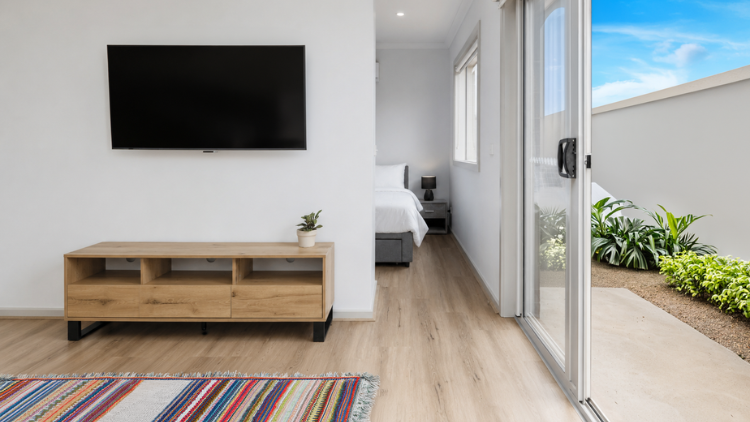
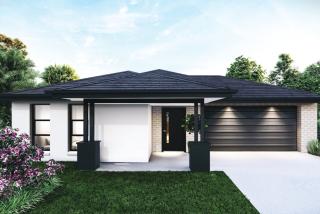
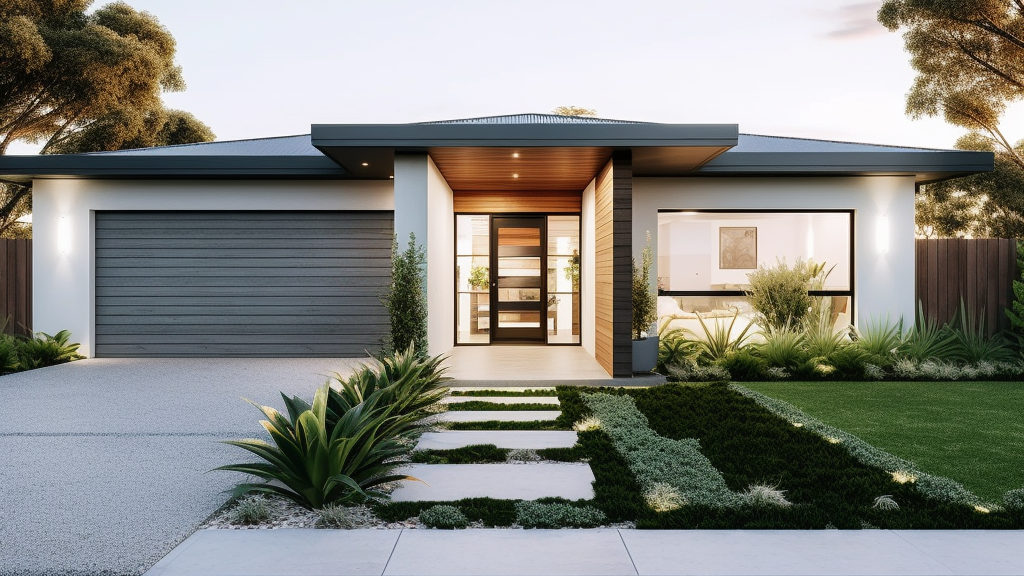
Standard SDA Residential Property DesignStandard SDA Residential 2 participant, 1 Carer Floor Plan

To view all our SDA Investment Properties please click here: https://tinyurl.com/2bce3rfv

Co-living Property 

6%-10% Gross Yield

A co-living property is a shared living arrangement where residents have their own private master bedroom with ensuite and share common areas such as kitchens & living areas.    

Co-living properties are particularly popular among young professionals, entrepreneurs, students and single retirees especially in urban areas where housing costs are high. They offer residents an opportunity to live in desirable locations without the high costs associated with renting an entire dwelling. 

Additionally, they provide a built-in community, which can be appealing for individuals relocating to a new city or those looking for more social interaction. 

Co-living can be more affordable than other housing options, especially in high-demand urban areas. The inclusive rent often covers utilities, internet, and other shared amenities.  

For property investors, co-living properties can yield higher returns than traditional housing since multiple residents share spaces and contribute to the overall rent. Additionally, the demand for flexible and community-centric housing in urban locales can make co-living properties a compelling investment option. 

 Standard Co-Living Residential Property Design

Standard Co-Living Residential Floor Plan

To view ouCo-Living investment properties please click here: https://tinyurl.com/y6ffvp2k

Dual Key Property 

6%-8% Gross Yield 

A dual key property is a type of residential property that’s designed to house multiple occupants separately, offering a unique arrangement that combines aspects of both singular and multi-unit dwellings. 

A dual key property is typically a single building that has two dwelling that can be accommodated separately. 

Inside a dual key property, you’ll usually find a larger primary living space, which might include one or two bedrooms, a kitchen, living area, bathroom, and laundry and a smaller secondary space, often similar to a studio apartment, with its own bedroom, bathroom, and a small kitchenette. 

These properties can be particularly appealing because they offer the potential for dual rental income. An investor can lease out both spaces separately, often leading to a higher combined rental yield than renting the entire unit as a singular space. 

Dual key properties have gained popularity in markets with high housing demand and limited space, especially in urban areas. They offer a versatile solution for both homeowners and investors to maximise the utility and profitability of a single real estate asset.

 Standard Dual-Key Residential Property Design


Standard Dual-Key Residential Floor Plan

To view our Dual Key investment properties please click here: https://tinyurl.com/bd4r7jr9


SIL (Supported Individual Living) Property 

7-9% Gross Yield 

 A SIL property refers to housing that supports individuals under the Supported Independent Living (SIL) framework of the Specialised Disability Accommodation (SDA). 

A SIL home is a house that has slight design modification to help enrich the life of the participant. 

A SIL Support Company would lease the entire property generally under a standard 5+5 yearlease to accommodate their participants who don’t qualify for SDA accommodation under the SDA. 

SIL properties are accommodations where support services are provided to SDA participants who need assistance to live independently. These supports can range from daily tasks like meal preparation and personal care to more comprehensive 24/7 care, depending on the individual’s needs. 

While the home is called a SIL home the carers that lease the home and also provide the day to day care to the participants are also called SIL carers. 

The primary goal of SIL is to help those with disabilities lead lives that are as normal and independent as possible, tailored to their individual needs and circumstances. 

For property investors a SIL property can provide a higher return secured by a long term lease. 

Standard SIL Residential Property Design

Standard SIL Residential, 2 Participant, 1 Carer, Floor Plan

Dual Occupancy Property


5%-9% Gross Yield


A dual occupancy property typically consists of two distinct dwellings under one roof or on one parcel of land.


These dwellings generally consist of one larger residency and one smaller with one, similar to a dual key but where the second residency has a full living area and kitchen.

Dual occupancy is a way to make the most of a single block of land, especially in areas where land is scarce or expensive.

For property investors, dual occupancy can provide increased rental yields and versatility in property usage.


Standard Dual Occupancy Residential Property Design

Standard Dual Occupancy Residential Floor Plan


To view our Dual Occupancy investment properties please click here: https://tinyurl.com/4ubc8eab

Duplex Property


5%-8% Gross Yield


A duplex property is a type of residential building that consists of two separate dwelling units, typically either side-by-side or one on top of the other, sharing a common central wall.

A duplex usually appears as a single building structurally, but it is designed to accommodate two separate households. 


In most cases a duplex are a mirror image of each other proving two full identical residences under the same roof divided by a solid common wall.


Duplex can offer a greater return to investors as each residence is a larger house style design.

It's important to distinguish between duplexes and dual occupancy properties. While both involve two dwellings on a single block of land, a duplex specifically shares a common wall between the units. In contrast, dual occupancy properties might consist of two entirely separate buildings on the same parcel of land.


Standard Duplex Residential Property Design


Standard Duplex Residential Floor Plan


To view our Duplex investment properties please click here: https://tinyurl.com/4ranctky


Related Posts

Are High Yield Properties the Future of Property Investing?

TL;DR The May 2026 Federal Budget abolished negative gearing for established properties purchased after 12 May 2026 and will replace the 50 per cent CGT discount with indexation from 1 July 2027. New builds are exempt and keep both tax benefits. With ABS data showing rents still rising and housing the biggest driver of inflation, high yield new builds such as co-living, dual occupancy and duplex homes now offer stronger cash flow and better tax treatment.

Continue reading

User By Aus Investment Properties

Solo Renters: The Fastest Growing Force in Australia’s Rental Market

TL;DR Lone-person households are Australia’s fastest growing household type and make up roughly a quarter of the nation’s three million renting households, yet most rental stock is built for families. Purpose-built co-living, rooming house and studio accommodation adds multiple self-contained dwellings to a single block, delivers strong yields and targets a tenant pool that is growing every year. The investors who win in this space will be the ones who prioritise quality, compliance and location.

Continue reading

User By Aus Investment Properties

SMSF Residential Property and LRBA Changes: What Investors Need to Know

TL;DR The Australian Government has agreed to support an amendment that would ban future limited recourse borrowing arrangements, or LRBAs, for residential property by superannuation funds. Existing SMSF borrowings are not intended to change, and the Government has described a 45-day transition period for investments already in progress. There is no confirmed August cut-off yet, but investors relying on SMSF lending should treat August as a planning window, not a guaranteed deadline.

Continue reading

User By Aus Investment Properties

Australian Property Investment in 2026: What the Growth Forecasts Mean for Investors

Australian property market forecasts for 2026 are generally positive, with most analysts expecting moderate price growth across the country. For property investors, however, headline growth figures tell only part of the story. The real question is not whether prices will rise, but where investment property fundamentals still stack up under tighter borrowing conditions and higher holding costs.

Continue reading

User By Aus Investment Properties

Vacancy Rates Hold Steady: What August Data Means for Australian Property Investors

National rents remain tight, but opportunities are emerging for savvy investors Australia’s rental market continues to show remarkable resilience, with the national vacancy rate holding firm at 1.2% in August 2025. According to SQM Research, this equates to just 37,742 vacant rental properties nationwide 121 fewer than the previous month. For property investors, the data tells a story of strong tenant demand, limited supply, and opportunities for carefully positioned investments.

Continue reading

User By Aus Investment Properties

National Property Listings Show Mixed Signals: What This Means for Investors in 2025

In July 2025, total residential property listings fell 3% month-on-month and 1.8% year-on-year, according to SQM Research. This measured retreat in vendor activity shows many sellers are holding off ahead of the busy spring selling season. For Australian property investors, this market phase presents a unique set of opportunities. Supply is tightening in some cities, while others are seeing renewed confidence — and knowing where to focus could be the key to your next successful investment.

Continue reading

User By Aus Investment Properties

Why Buy With Aus Investment Properties?

  • Dedicated In-house Project Manager.
  • High-yielding properties.
  • Independent rental assessment.
  • Full turnkey properties, 'Ready to Rent'.
  • Brand new properties with builders warranty.
  • High quality, highly specified properties.
  • Tax and depreciation benefits from new properties.
  • Buy direct from the builder.
  • Investor or SMSF.
Buy Property Banner

Search 1000'S Of Off-Market Investment Properties!

Capital Growth 12 months, measures the increase in a property’s value over the previous 12 months, indicating how much the investment has appreciated in that timeframe.

Capital Growth 10-year annualised, reflects the average annual increase in a property’s value over the last decade, smoothing out short-term fluctuations to show long-term appreciation trends.

Vacancy Rate, indicates the percentage of properties that are currently unoccupied in that postcode, It’s a key indicator for investors to assess the rental demand.

SMSF Property Investing, when investing inside your SMSF there are some restrictions on how you can purchase investment properties. We use the following information to help navigate the SMSF investment property options.

This property is a single-contract property suitable for an SMSF.

SMSF Single Contract

Compare listings

Compare