Lone-person households now make up around one in four Australian renters, and high quality co-living and studio accommodation is emerging as one of the smartest ways for investors to meet the demand.
By Aus Investment Properties
TL;DR Lone-person households are Australia’s fastest growing household type and make up roughly a quarter of the nation’s three million renting households, yet most rental stock is built for families. Purpose-built co-living, rooming house and studio accommodation adds multiple self-contained dwellings to a single block, delivers strong yields and targets a tenant pool that is growing every year. The investors who win in this space will be the ones who prioritise quality, compliance and location.
Why solo renters matter to property investors right now
The short answer: solo renters are the largest under-served segment of the Australian rental market. Lone-person households accounted for 25.6 per cent of all Australian households at the 2021 Census, up from 24.4 per cent in 2016, and they are the fastest growing household type in the country. Around a quarter of Australia’s roughly three million renting households are people living alone, and the Australian Bureau of Statistics projects lone-person households will reach 26 to 28 per cent of all households by 2046.
Supply, however, is badly mismatched. Most Australian rental stock was built for families, and ABS data shows more than three quarters of households have at least one spare bedroom. Single tenants are competing for multi-bedroom homes because there is not enough right-sized stock, so investors who provide it are meeting a structural gap rather than chasing a fad.
The hidden demand inside share houses
The 2026 Australian Renter Survey by CBRE and REA Group found that 45 per cent of share house tenants only share because living alone is not financially viable, and 65 per cent would prefer to live independently if they could. That is an enormous pool of latent demand for affordable, self-contained accommodation.
Affordability pressure sharpens the point. Around 28 per cent of renting households now spend more than 30 per cent of their disposable income on housing, and about one in five lower-income renters spent over half their income on rent in 2023. A solo renter carries a full rent on a single income, so well-priced studio and room-based accommodation attracts deep, consistent demand and low vacancy.
How co-living and rooming houses add real supply
This is where the investment case gets interesting. Converting or building one dwelling footprint into four or five self-contained studios genuinely increases housing supply on the same parcel of land. That is different from simply reshuffling tenants between existing homes. Co-living properties and rooming houses generate multiple income streams from a single title, which is why they consistently rank among the highest-yielding residential strategies available to Australian investors.
What separates a quality asset from a problem one:
Compliance first. Rooming house and co-living rules differ by state. Victoria requires rooming house registration and minimum standards, New South Wales regulates boarding houses under its own legislation, and Queensland has separate rooming accommodation rules. Buying a compliant, purpose-built asset avoids the pitfalls that gave older boarding houses a poor reputation.
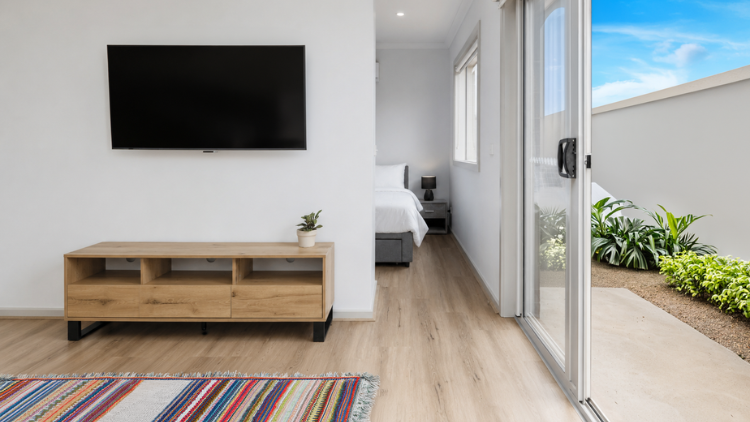
Design for the tenant, not just the yield. Fully self-contained rooms with their own bathroom and kitchenette out-perform shared-facility models on rent, retention and resale. Remember that solo renters are not all young professionals. A large share are over 55, so accessibility and security features widen your tenant pool.
Location and price point. With Brisbane’s median dwelling value now past $1.1 million, Perth and Adelaide remain the most accessible capital city markets for investors entering this space, alongside well-connected regional centres with strong employment. Dual key and apartment products can also serve the solo renter market where full rooming stock is not permitted.
Outlook
Every structural indicator points the same way. Australia adds roughly 150,000 households a year, and around one in three formed over the coming decade is expected to be a lone-person household. Two people who once shared one dwelling need two dwellings when they live apart, which keeps demand for compact, affordable accommodation rising even when population growth cools. Planning reforms in several states are also gradually easing the path for compliant co-living development. You can explore current co-living, rooming house and studio-style listings using the advanced search on our website.
Solo renters are no niche. They represent about a quarter of Australia’s rental market, they are its fastest growing segment, and they are chronically under-supplied with housing that suits their needs and budgets. High quality co-living and rooming house stock meets a genuine social need while delivering some of the strongest cash flow available in residential property. Quality, compliance and location are what separate a great asset from a headache.
Key Takeaways
Solo renters are about 25 per cent of the market. Lone-person households made up 25.6 per cent of all households at the 2021 Census and roughly a quarter of Australia’s three million renting households.
Demand is growing fastest of any household type. The ABS projects lone-person households will hit 26 to 28 per cent of all households by 2046, with huge latent demand from the 65 per cent of share house tenants who would rather live alone.
Co-living adds real supply and real yield. Multiple self-contained studios on one title increase housing stock and create several income streams from a single asset.
Rental stress makes affordability the winning pitch. With 28 per cent of renting households spending over 30 per cent of income on housing, well-priced solo accommodation enjoys deep demand and low vacancy.
Quality and compliance are non-negotiable. State rooming house regulations differ, and purpose-built, fully compliant stock protects both tenants and returns.
Visit ausinvestmentproperties.com.au to view all our available investment properties and use our advanced search filters to find high-growth, low-vacancy locations that match your budget.
FAQ’s
What percentage of Australian renters live alone?
Roughly a quarter. Lone-person households made up 25.6 per cent of all Australian households at the 2021 Census, and industry surveys consistently find 25 to 28 per cent of renting households are people living alone.
Are rooming houses a good investment in Australia?
They can deliver some of the highest residential yields available because one title produces multiple income streams, and solo renter demand is growing. Returns depend heavily on compliance with state regulations, build quality and location, so purpose-built, fully compliant stock is the safer path.
What is the difference between co-living and a rooming house?
A rooming house is a legally defined property type where rooms are let individually, regulated separately in each state. Co-living is a modern, design-led version of the same idea, usually offering fully self-contained studios with premium shared amenities and professional management.
Why is demand for solo rental accommodation growing?
Lone-person households are Australia’s fastest growing household type, projected to reach up to 28 per cent of all households by 2046. Surveys also show 65 per cent of share house tenants would prefer to live alone, creating large latent demand for affordable self-contained homes.
Do co-living properties increase housing supply?
Yes. Building four or five self-contained studios on a single dwelling footprint adds net new homes on the same land, which is why well-designed co-living is increasingly supported by planning policy as a response to the housing crisis.
Sources
- Australian Bureau of Statistics (2022), Housing: Census 2021 and Household Composition data, abs.gov.au
- Australian Bureau of Statistics (2024), Household and Family Projections, Australia, 2021 to 2046, abs.gov.au
- Australian Bureau of Statistics (2022), Housing Occupancy and Costs, 2019-20, abs.gov.au
- Australian Institute of Health and Welfare (2025), Housing Affordability and Home Ownership and Housing Tenure, aihw.gov.au
- National Housing Supply and Affordability Council (2025), State of the Housing System 2025, nhsac.gov.au
- CBRE Research and REA Group (2026), Australian Renter Survey 2026, cbre.com.au
Disclaimer: This article is intended for general informational purposes only and does not constitute financial, legal or investment advice. Please consult a licensed professional before making investment decisions.
© 2026 Aus Investment Properties | www.ausinvestmentproperties.com.auperties
 By Aus Investment Properties
_1782275011lcroQ-card.png)
_1776213150EC5td-card.jpg)
-(1)_17762144417K00n-card.png)
_1776214724iUydB-card.png)
_1776298437p3Tbd-card.png)

_1782275011lcroQ.png)